Traveling to Japan with food allergies: the survival guide (restaurants, konbini, useful phrases)
Traveling to Japan is a dream for food lovers... until you have to manage a food allergy or intolerance thousands of miles away. The difficulty is not only the language: some ingredients are considered "bases" (broths, sauces, seasonings) and are not immediately obvious.
The first trap is the invisible: dashi (broth, often fish-based) and soy sauce are everywhere (ramen, sauces, marinades, dressings). Another classic: soy sauce may contain wheat. Add to that breadings (panko), mayonnaises, noodles, thickeners, and the chef's "little touches"... and you understand why a clear strategy makes all the difference.
Before leaving: the safety checklist
Prepare as you would for a hike: (1) medical appointment if necessary, (2) treatments and prescriptions, (3) travel insurance covering emergencies, (4) dedicated kit (antihistamines, auto-injector if prescribed), (5) physical + digital copies, (6) list of your allergens in English + Japanese. And if you are highly sensitive to cross-contamination, note it explicitly: it is often the least understood point.
The dietary restriction card: your best ally
Prepare a card in Japanese that clearly states: your allergens, severity, and the request to avoid cross-contamination. Useful example: « 私は食物アレルギーがあります。◯◯(アレルゲン)を食べると重い症状が出ます。調理器具や油の共有も避けてください。 » (I have food allergies. If I eat ◯◯, I have a severe reaction. Please also avoid sharing utensils/oil).
At a restaurant in Japan: how to order without stress
At the entrance, show the card before sitting down if possible. Choose restaurants accustomed to tourists (central areas), and establishments where the menu is simple and standardized. 'Build-your-own' dishes (donburi, shabu-shabu, some yakiniku) can be easier to secure if the sauces are separated.
Ask the key question: « これは◯◯が入っていますか? » (Is there ◯◯ in this?) and above all « 別の鍋/油/まな板で作れますか? » (Can you cook with another utensil/oil/cutting board?). If the answer is vague, choose a fallback option: konbini, supermarket, or a more "transparent" restaurant (open kitchen, visible ingredients).
Konbini and supermarkets: the control option
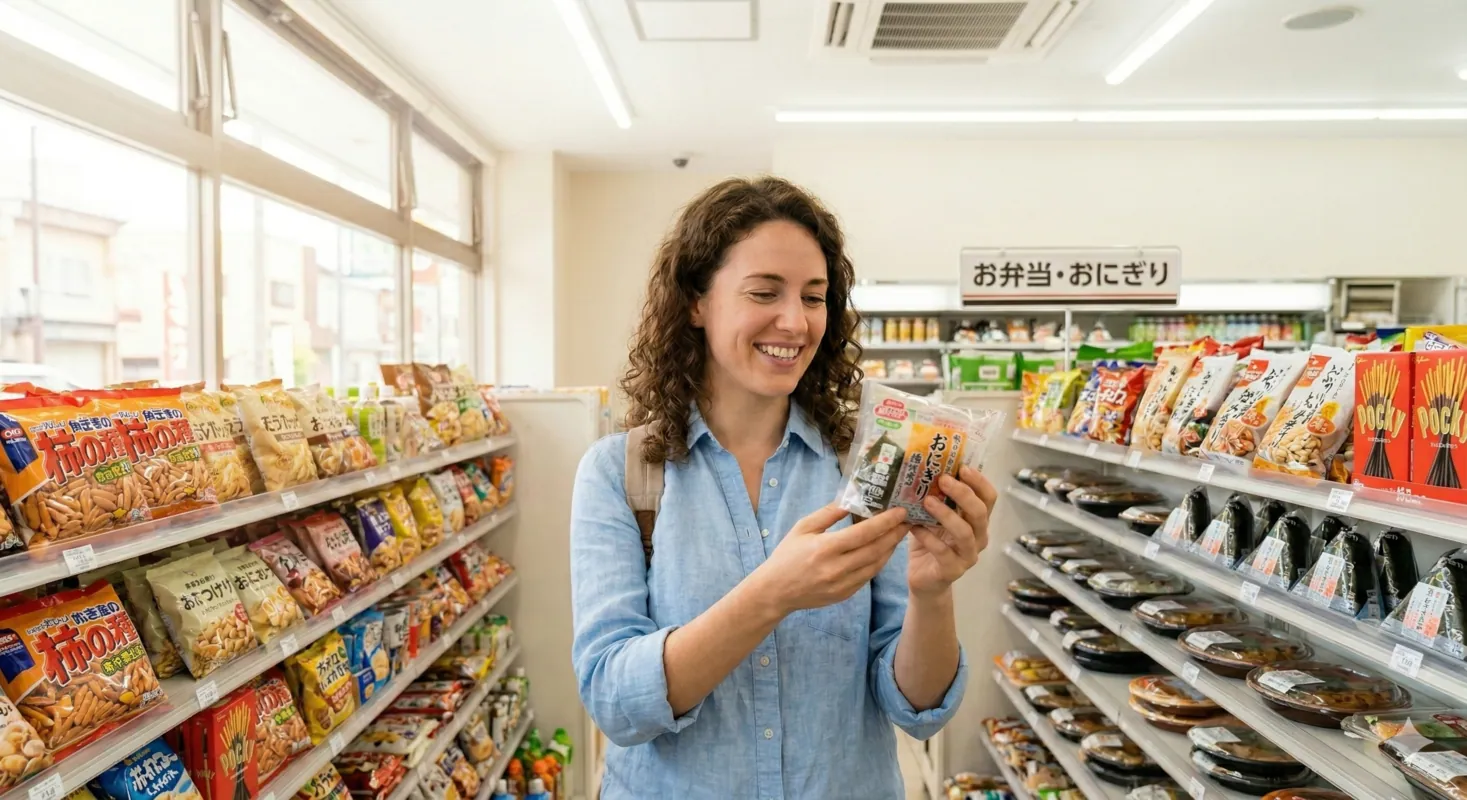
Konbinis (7-Eleven, FamilyMart, Lawson) and supermarkets are often the most reliable solution: you have the ingredients right in front of you. Look for the "allergens" box and ingredient lists (often long). Warning: a recipe can change (limited editions), and a product safe one week may become risky the next.
Plan B: eat simple, eat often
When you are tired or in a hurry, mistakes happen. Anticipate: spot 5 to 10 "OK" products (by brand + reference), keep photos of their labels, and always keep an emergency snack in your bag. If you can, sometimes book accommodation with a kitchenette: a few simple meals can save a trip.
Emergency: better to know what to do
Note the emergency number in Japan: 119 (ambulance). Useful phrase: « 救急車を呼んでください。食物アレルギーです。 » (Call an ambulance, it's a food allergy). If you have a prescribed auto-injector, keep it accessible and let your travel companion know.
Save time: scan rather than decipher
Deciphering Japanese labels after a day of sightseeing is exhausting. Our app instantly analyzes ingredients and cross-references them with your allergy profile: scan the label, get a clear YES/NO, and focus on the trip rather than the kanjis.
Take the next step
Give your next purchase a smarter label check
Create your YumiScan account, add your allergen profile, and let AI decode the label before you buy. Your first 3 scans are free.
Create my account