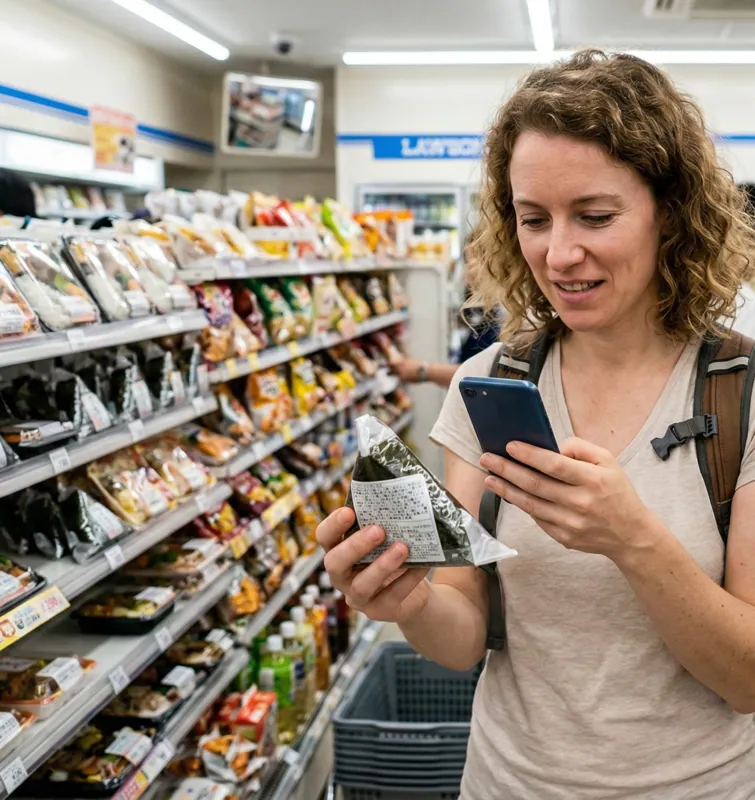
Konbini and supermarkets in Japan: how to read food labels and avoid allergens
Konbinis (7-Eleven, FamilyMart, Lawson) and supermarkets are a goldmine: bentos, onigiri, snacks, desserts... But faced with a 100% Japanese label, you can quickly feel lost. The right approach: knowing exactly where to look and what to spot first.
Key areas of a Japanese label
On most products, look for: (1) 原材料名 (ingredient list), (2) アレルゲン / アレルギー物質 (allergens), (3) 注意 (important notes), (4) manufacturer information. The allergen box is often quicker to read than the full list, but it does not replace careful verification if you are highly sensitive.
The 8 major allergens to spot (mandatory on labeling)
Remember these common writings: wheat 小麦(こむぎ), buckwheat そば, egg 卵, milk 乳 / 乳成分, peanut 落花生 / ピーナッツ, shrimp えび, crab かに, walnut くるみ. Tip: some labels use kana (hiragana/katakana) instead of kanji.
The "frequently indicated" allergens (but to watch out for)
Many products also mention other common allergens (e.g. soy 大豆, sesame ごま, apple りんご, peach もも, gelatin ゼラチン). If you are allergic to them, make these words your "red alerts".
The traps: synonyms and derivatives
An allergen can hide under a derivative form: for milk, spot 乳成分 (milk components), バター (butter), ホエイ (whey), カゼイン (casein). For egg: 卵黄 (yolk), 卵白 (white). For wheat: 小麦, but also ingredients linked to breadings and doughs (e.g. パン粉 for breadcrumbs).
Mentions of traces and cross-contamination
Look for formulations such as: 「本製品は◯◯を含む製品と共通の設備で製造しています」 (manufactured on common equipment with products containing ◯◯). Depending on your sensitivity level, this may be enough to avoid the product.
A simple in-store strategy (that really works)
1) Start with "simple" products (short ingredients). 2) Check the allergen box. 3) If in doubt: move to the next. 4) Re-verify with each purchase (recipes change, especially limited editions). This method drastically reduces bad surprises.
Save time: from deciphering to scanning
Even knowing a few kanjis, reading 10 packages in a row tires you out quickly. Our application is designed for Japanese labels: you enter your restrictions, scan, and get a clear answer to shop peacefully.
Take the next step
Give your next purchase a smarter label check
Create your YumiScan account, add your allergen profile, and let AI decode the label before you buy. Your first 3 scans are free.
Create my account